

May 14, 2026
Greetings!
I am Harry Agina, the CEO of the Afro-Scope Project right here on Afro-Scope.com, where, as our slogan says, “We Beam The African Ways Of Life To The World.” This is a new addition to our bouquet of the content categories on this website. It is titled, “AfroLinguistic Etymology.”
Etymology means the study of the ORIGIN and HISTORY of words, and how their meanings and forms change (evolve) over time. “AfroLinguistic,” of course, stands for African Languages. So, this is where we inform the world of the contributions of Africa in the composition of the words that make up mainstream English dictionaries.
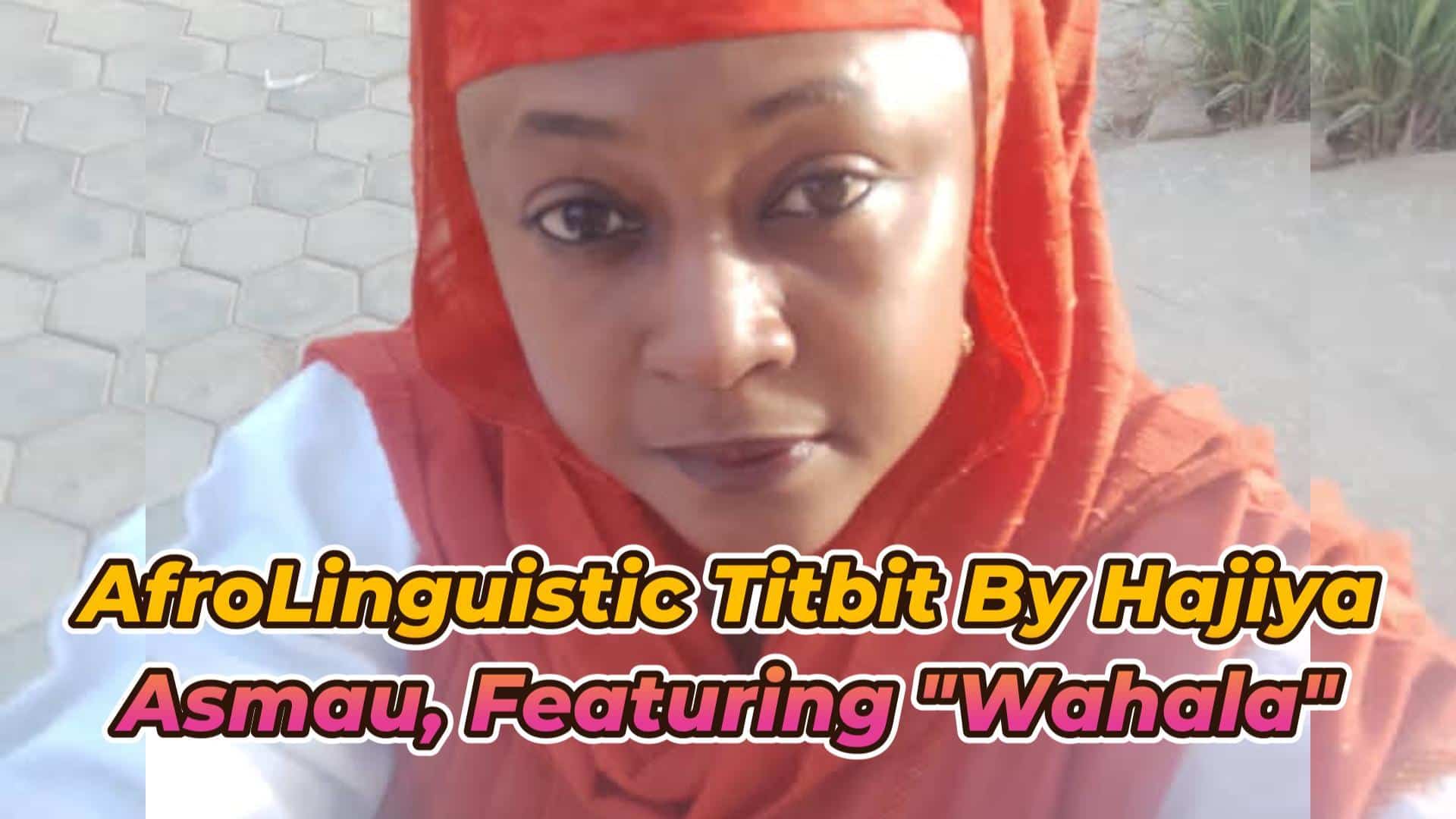
This is based on two facts. One fact is that English is the dominant language of the world, spoken by about 1.5 billion people of the 8.5 billion global population. Another fact is that a sizeable fraction of the English language is made up of adaptations of words from several languages of the world. The mandate of this series is to inform you of the words, including slangs of many African languages, which made their way into the English vocabulary. We are starting with the slang word, WAHALA. This is where I hand you to our etymologist, Asmau Suleiman, to take you on the journey. Here we go:
Hello!
I am Asmau Suleiman with the Afro-Scope Project. I am here to thrill you a little with African ETIMOLOGY, featuring the word “WAHALA,” which means TROUBLE and a few other synonyms. It originated as a local parlance in Nigeria, West Africa.
There are certain words that stop belonging to one people and begin to belong to everyone. In Nigeria, wahala is one of them.
Today, the word slips easily through conversations in Lagos traffic, Kano markets, Abuja offices, London apartments, and even across social media worldwide. “No wahala,” Nigerians say casually — meaning no problem, no stress, no trouble.
The word itself traces part of its deeper roots to Arabic influences that travelled across West Africa centuries ago. In its older Arabic connection, it carried meanings linked to difficulty, disturbance, burden, or trouble — the kind of thing that complicates peace. Over time, the word settled deeply into the everyday speech of the Hausa people of Northern Nigeria, where it became natural, expressive, and alive.
From there, it spread through trade routes, migration, music, films, friendships, and the rhythm of ordinary life.
Then came Nigerian Pidgin English — the great unifier of Nigerian expression.
Pidgin carried wahala beyond tribe, beyond region, beyond class. Suddenly, everyone understood it. Yoruba, Igbo, Tiv, Ijaw, Fulani, Edo — all Nigerians could laugh, complain, warn, or sigh with the same word.
“I beg, I no want wahala.” (Please, I don’t want any trouble/problem)
“I beg, carry your wahala dey go.” (Please, take your trouble away from me).
Simple sentences — but full of emotion, humor, exhaustion, and attitude all at once.
And somehow, the word traveled even farther.
Through Nollywood, Afrobeats, comedy skits, football culture, and the Nigerian diaspora abroad, wahala crossed oceans. In London, Toronto, Atlanta, and Johannesburg, people who are not even Nigerian now say things like “No wahala” almost instinctively. This is why the new BBC drama series, “Wahala,” feels so fitting, and befittingly starring Nigerian Nollywood iconic actress, Genevieve Nnaji.


The title alone carries something Nigerians instantly recognize: tension, secrets, friendship, chaos, drama — and maybe survival too. Set around Nigerian diasporic lives in Europe, the series reflects something familiar: even when Nigerians leave home, home somehow travels with them. The language travels. The humor travels. The wahala travels, too.
And perhaps that is the beauty of the word.
It is more than “trouble.”
It is culture with personality.
A whole mood packed into three syllables.
Wa-ha-la – Wahala.