

July 20, 2026
THE ‘MESSIAH’ WHO TURNED TWINS FROM “DEMONS” TO JEWELS.
Greeting!
I am Harry Agina with the Afro-Scope Project. I introduce to you one of our Executive Directors, Josiah Onesimus Haruna, who brings you another edition of our AfroCentic Titbits. If you are new to the Afro-Scope Project or new to our AfroCentric Titbits Series, you probably do not know that this particular series is unique among the many series here on Afro-Scope.com website. Why? Because it is the only series that goes beyond African citizenship in content. Here is what I mean: One does not have to be African in any form to be recognized or appreciated or celebrated under this series. A European, Asian, Mexican or a person from any other culture of the world can be appreciated or celebrated as an AfroCentric hero for doing anything that is African in one form or another. For instance, the work of a European musician who specializes in any African genre of music qualifies as a feature under our AfroCentric (or Africa-Centered) series.
Did you know that having twin babies was once a huge taboo in Africa? Did you know that twins were labelled as some kind of demons from hell, and killed at birth? In some cases, even the mothers who gave birth to twins were either killed or driven away from the community. Now, in the same Africa, twins are celebrated as jewels from the Almighty God. This is an AfroCentric story of a Scottish Missionary who changed that ancient perception of twins as demons from hell to twins as jewels from the Almighty God. Josiah Onesimus Haruna has the story for ya:
HELLO!
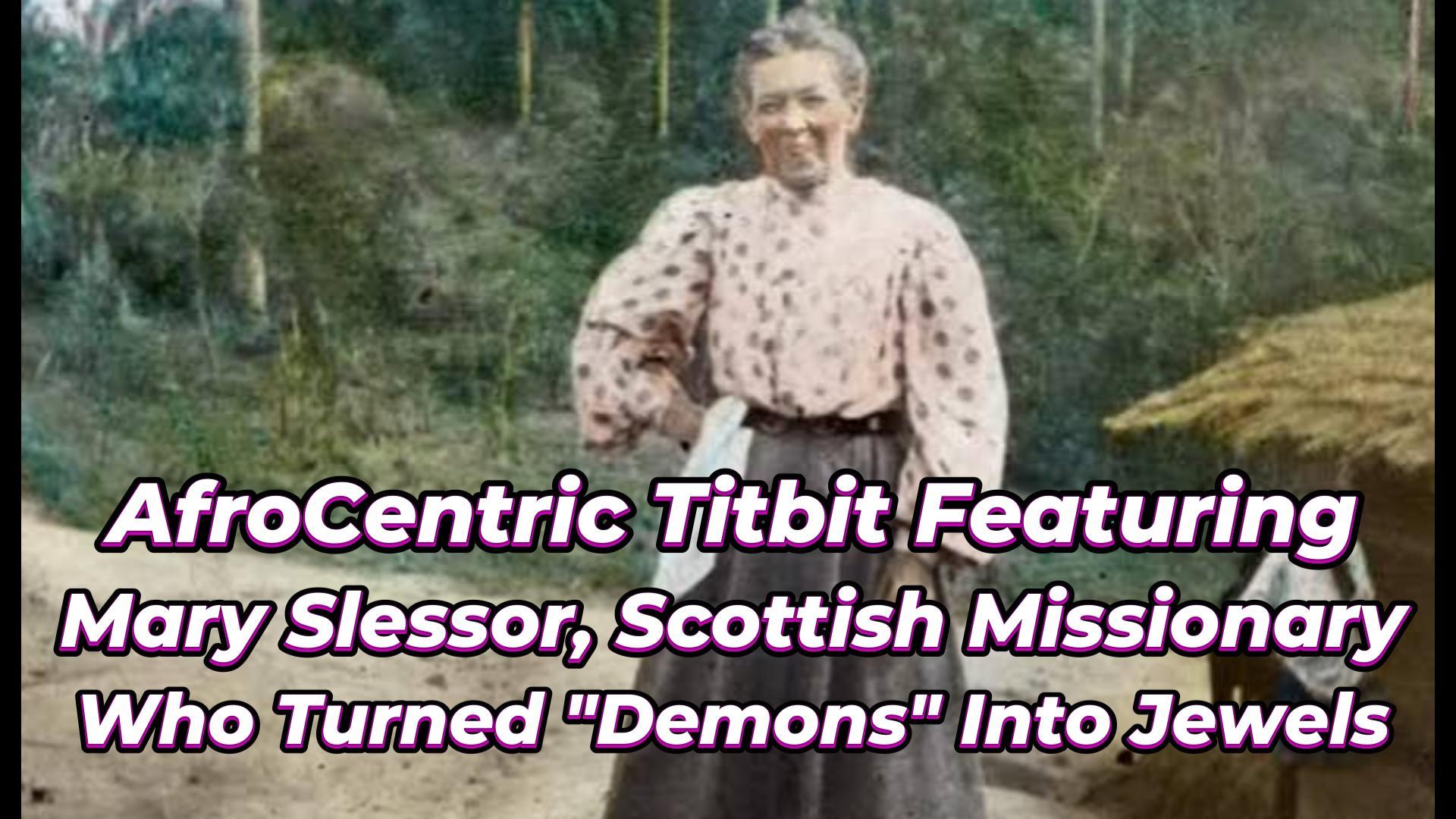
I am Josiah Onesimus Haruna. When people talk about individuals who have left an enduring mark on Nigeria’s history in West Africa, one name that continues to stand out is Mary Mitchell Slessor. More than a missionary, she was a humanitarian, educator, peace advocate, and protector of vulnerable children whose influence can still be felt more than a century after her death. Her remarkable work among the Efik and Okoyong people of present-day Cross River and Akwa Ibom States transformed countless lives and earned her a permanent place in Nigeria’s history.
Mary Slessor is perhaps best known for her campaign against the abandonment and killing of twins, a practice that existed in some communities during the nineteenth century. However, reducing her legacy to that single achievement would overlook the many other ways she contributed to the social development of Southern Nigeria. She championed education, defended women’s rights, mediated conflicts, cared for abandoned children, and worked tirelessly to improve the welfare of the communities she served.. Below is the photo of Madam Malinda Mgbafor Okereke from the Igbo tribe of southeast Nigeria. She was the last surviving twin rescued by Mary Slessor. She died on June 13, 2025, at the age of 115.

Here’s an Afro-Scope Editorial statement: Like the other twins before and during her time, Madam Mgbafor Okereke was branded a “demon” from the devil. She was almost killed, and Mary Slessor rescued her twin sibling and her from the jaws of death. Ironically, she far outlived most, if not all her peers who were not twins. She lived from the 20th century at a time when average life span was much below 50, and crossed into the 21st century (2025) to the age of 115 years. There’s a lesson from Madam Malinda Okereke’s longevity in life. The gods of the land would have struck her dead much earlier than her peers if there was any validity in the ancient African perception that twins were demons.

Born on December 2, 1848, in Aberdeen, Scotland, Mary grew up in a family that struggled with poverty. Her father worked as a shoemaker, while her mother laboured in a textile mill to support the household. Like many children from poor families during the Industrial Revolution, Mary had little opportunity for formal education. She left school at a young age and joined her mother in the textile factory, working long hours to help the family survive.
Despite these difficult circumstances, Mary never abandoned her love of learning. She spent much of her free time reading the Bible and missionary publications, particularly the stories of Scottish missionary and explorer David Livingstone. His work in Africa inspired her deeply and planted the idea that she, too, could dedicate her life to serving others.
That dream became a reality in 1876 when, at the age of twenty-seven, she arrived in Calabar as a missionary with the United Presbyterian Church. Unlike many Europeans of her era who remained within mission compounds, Mary immersed herself in the local communities. She learned the Efik language, respected local customs where they did not conflict with her beliefs, and built genuine relationships with the people she had come to serve. Her willingness to live among them earned their trust in a way that many outsiders never achieved.

Her courage became even more evident when she chose to move into Okoyong, a region that many considered too dangerous for European missionaries. The area was known for violent conflicts and was largely avoided by foreigners. Mary ignored the warnings and settled there, believing that meaningful change could only happen by living alongside the people. She endured tropical diseases, difficult journeys through forests and rivers, and constant physical hardship, yet she remained committed to her mission.
The work that brought Mary Slessor worldwide recognition was her campaign to protect twins. At the time, some communities believed twins were the result of evil spirits or supernatural forces. As a result, newborn twins were often abandoned in forests, while their mothers faced rejection and isolation. Mary refused to accept this practice. She rescued abandoned infants, cared for them in her own home, and eventually adopted many of them as her own children. More importantly, she patiently engaged with community leaders, challenging long-held beliefs and encouraging them to abandon customs that endangered innocent lives.
Her efforts gradually changed attitudes toward twins in many parts of Southern Nigeria. What had once been considered a curse slowly became accepted as a natural part of life. Today, many Nigerians remember Mary Slessor as the woman whose determination helped save countless children who would otherwise have been abandoned.

Her humanitarian work extended well beyond the rescue of twins. Mary established schools where children received basic education and practical skills. She encouraged literacy among girls at a time when female education received little attention. She also provided basic medical care, visited the sick, and offered comfort to families facing hardship. In many communities, she became a trusted adviser who settled disputes peacefully, helping to prevent violence and strengthen relationships between neighbouring villages.
Women, in particular, benefited from her advocacy. Mary opposed practices that subjected widows to abuse and challenged customs that placed women at a disadvantage. She believed every individual deserved dignity, regardless of gender or social status, and she consistently used dialogue rather than confrontation to encourage change.
Although she never married or had biological children, Mary became a mother to many. Her home served as a refuge for orphaned and abandoned children, especially the twins she rescued. The Efik people affectionately gave her the title “Eka Kpukpru Owo,” meaning “Everybody’s Mother.” It was a fitting tribute to a woman whose compassion knew no boundaries.
Her influence eventually reached beyond missionary work. Because of her deep understanding of local customs and her reputation for fairness, the British colonial administration appointed her to administrative roles, including Vice Consul in Okoyong and later Vice President of the Native Court. In these positions, she mediated disputes and encouraged peaceful conflict resolution, earning respect from both local communities and colonial officials.
Life in West Africa was far from easy for Mary Slessor. She suffered repeated attacks of malaria and other tropical illnesses that frequently left her weak. Travel through remote communities often meant long journeys by canoe or on foot across difficult terrain. She also faced resistance from individuals who opposed the reforms she championed. Yet despite these challenges, she never abandoned her mission. Her determination remained unwavering throughout nearly four decades of service.
Mary Slessor died on January 13, 1915, in Use, near Calabar, after years of battling illness. Her funeral was attended by colonial officials, missionaries, and thousands of Nigerians whose lives she had touched. Few foreigners have ever received such genuine affection from the communities they served.
Today, Mary Slessor’s legacy continues to shape Nigerian history. Her name lives on through schools, churches, hospitals, roads, and monuments across Cross River and Akwa Ibom States. Historians continue to study her remarkable life, while museums and educational institutions preserve her story for future generations. Even in her native Scotland, she remains a celebrated figure, and her image has appeared on Scottish banknotes in recognition of her humanitarian achievements.
Modern historians also acknowledge that Mary Slessor’s work took place within the broader context of British colonial rule. Like many missionaries of her era, she operated alongside colonial institutions, making her legacy part of a larger historical conversation about religion, humanitarianism, and empire. Recognizing this context provides a more complete understanding of her life without diminishing the compassion and courage that defined her work.
More than one hundred years after her death, Mary Slessor remains one of the most influential women to have served in Africa. Her story is one of resilience, empathy, and unwavering commitment to humanity. She crossed continents to serve people she had never met, challenged harmful practices through patience and persuasion, and dedicated her life to protecting the vulnerable. Her legacy serves as a powerful reminder that lasting change often begins with a single person willing to stand up for what is right, regardless of the obstacles ahead.
Meta Description: Discover the inspiring story of Mary Slessor, the Scottish missionary who transformed lives in Nigeria by rescuing abandoned twins, promoting education, defending women’s rights, and leaving one of the greatest humanitarian legacies in African history.