

QUEEN NANNY OF THE WINDWARD MAROONS
The Woman Who Refused To Live In Chains.
COUNTRY: Jamaica, in the Caribbean.
DATE OF BIRTH: 1685 or 1686 in Gold Coast (Now Ghana) in West Africa.
DATE OF DEATH: 1760, aged 74 or 75 years.
WRITTEN BY Asma’u Suleiman and Harry Agina.
Hello! This is the Afro-Scope Project, where Africa remembers her own. History has many stories of people who fought for freedom. But some stories begin with a people who simply refused to be captured by history.
High in the mountains of Jamaica in the Caribbean, among forests, valleys, and terrain difficult for colonial armies to penetrate, an African woman became one of the most formidable leaders of slavery resistance to British rule. Her name was Nanny. She became known as Nanny of the Maroons, or affectionately as Granny Nanny.

Although the exact circumstances of her birth remain uncertain, Jamaican historical traditions identify Nanny as being of West African, particularly Akan or Ashanti origin in what is known today as Ghana, which was then known as Gold Coast. Some Jamaican sources place her birth in Africa, while others caution that this cannot be established with certainty.
What is certain is that she became one of the most important leaders of the Maroon communities of Jamaica.
THE MAROONS:
To understand Nanny, we must first understand the people she led. The Maroons were Africans in Jamaica who escaped enslavement and established independent communities in the mountains and forests of the island. They built settlements beyond the effective control of the British plantations…
They cultivated their own land…
They defended their communities…
They preserved African traditions…
And they refused to surrender their freedom…
Nanny became the most celebrated leader of the Windward Maroons in eastern Jamaica. Her base became associated with Nanny Town, a settlement hidden among difficult mountainous terrain.

THE WARRIOR AND STRATEGIST:
Nanny’s greatest weapon was not simply physical strength. It was strategy. The British possessed trained soldiers, firearms, and military resources. The Maroons possessed something the British could not easily reproduce: Knowledge of the land.
Nanny and her fighters used the mountains and forests to their advantage. They relied upon ambushes, surprise attacks, hidden routes, scouts, and rapid movement. They could strike and disappear into terrain that was unfamiliar and hostile to colonial troops.
British attempts to penetrate the maroon strongholds repeatedly met determined resistance. Jamaican historical sources describe Nanny as an outstanding military leader whose tactics confused and frustrated British forces during the First Maroon War.
The struggle was not a brief rebellion. It became a prolonged contest over whether the Maroons would remain free.

THE FIRST MAROON WAR:
During the early eighteenth century, British forces attempted repeatedly to suppress the Maroons. The conflict became known as the First Maroon War. Nanny’s leadership became central to the resistance of the Windward Maroons. Her community survived through organization, discipline, knowledge of the environment, and determination.
SUPERIORITY OF AFRICAN GUERILLA
Nanny knew better than confront the British soldiers in their conventional open field battles where British superior firepower would annihilate the maroons’ warriors. Instead, she introduced African guerrilla warfare strategy of hit-and-run tactic. The art of advanced botanical camouflage played a prominent role in Nanny’s guerrilla warfare tactic.

Her warriors and she were disguised as trees by covering themselves from head to toe in tree branches, vines, and leaves. They stood still like trees, looking like trees to ambush British soldiers who marched past them, unaware that they were maroon warriors. Then, suddenly, the tree-like maroons sprang into action to massacre and vanquish the British soldiers. Terrified British soldiers frequently reported being attacked by “moving trees.” Nanny’s tactic severely damaged British military morale.
Nanny applied another African ingenuity for her strategic warfare against the British. She coordinated complex troop movements across vast mountainous distances without alerting the enemy. She utilized the Abeng—a typical African horn crafted from a hollowed cow horn. She manipulated the pitch of the horn for the tonal qualities of West African languages to communicate to her troops in forms of codes. She transmitted specific, encrypted alerts to her troops to inform them of British positions. To the British, these intricate military commands sounded like nothing more than random jungle noises.

Legend also has it that Nanny possessed some African magical spiritual powers that made her invincible, terrorizing colonial soldiers who were highly superstitious. It was claimed that she had the ability to catch British bullets with her hands or clothes and fire them back. There were also rumors that her soldiers wore garments adorned with the teeth of defeated enemies. It created profound psychological dread among British troops even before battles began.
These accounts belong largely to Maroon oral tradition and should be distinguished from independently verified military events. Their importance lies not in proving supernatural powers, but in showing how Nanny’s reputation became part of the psychological and cultural strength of her people. Her historical significance rests on her leadership, strategic ability, and the enduring resistance she helped sustain.
The British eventually captured Nanny Town in 1734. But capturing the settlement did not mean capturing the people. The Maroons continued their resistance. The British had learned a difficult lesson: Destroying a village was not the same thing as defeating a people determined to remain free.
THE TREATIES:
The First Maroon War eventually led to peace agreements between the British and the Maroon communities. Cudjoe concluded an agreement for the Leeward Maroons in 1739, while Captain Quao signed a separate agreement for the Windward Maroons later that year. Maroon oral traditions associate Nanny with resistance to the terms of peace, although the precise circumstances remain debated. What is documented is that, in 1740, a grant of 500 acres was registered for Nanny and her people. Their settlement, known as New Nanny Town, became associated with present-day Moore Town. The outcome illustrates an important distinction: the Maroons secured recognition of their communities and a measure of autonomy, but the treaties also imposed conditions. Their freedom emerged from prolonged resistance and negotiation, not from a simple or unconditional British concession.
The treaty chronology and land grant are supported by historical material from the Moore Town Maroons and Jamaica’s heritage authorities. mooretownmaroons.org
FREEDOM, COMMUNITY AND AFRICAN MEMORY:
Nanny’s importance extended beyond warfare. She was also regarded as a spiritual leader, wise woman, and guardian of her community’s traditions. She helped preserve customs, songs, music, stories, and cultural practices carried to Jamaica by Africans. Her leadership therefore protected more than territory…
It protected memory and the African culture.
The people she led had been violently removed from Africa. But they did not surrender everything that Africa had given them…
Their African traditions survived in the mountains…
Their African songs survived…
Their African stories survived…
Their knowledge survived.
And through leaders such as Nanny, the memory of African identity remained alive.

NANNY’S DEMISE:
There are conflicting dates of Queen Nanny’s or Granny Nanny’s death. Naturally, it favored the pride of British colonialists to claim in a record that she was killed in a bloody clash in March 1733 during the First Maroon War.
Most historians strongly dispute this account with the argument that Colonial forces frequently fabricated the deaths of rebel leaders to boost troop morale and declare premature victories.
The more popular theory, which is heavily supported by Maroon oral tradition and later land documents, is that she survived the war and died of natural causes in old age in 1760. Historical records of evidence show that in 1740—seven years after her alleged death in the First Maroon War—the British colonial government officially granted a 500-acre piece of land to Nanny and her people to establish New Nanny Town, which is now called Moore Town. This strongly indicates she was alive to secure the peace treaty, which gives credence to the account that she died in 1760.

THE LEGACY OF NANNY:
Nanny’s legacy extends beyond the battles she helped lead. She is remembered as a symbol of African resistance to enslavement, the preservation of African cultural identity, and the determination of a people to govern their own communities. Jamaica formally recognised her contribution by conferring the Order of National Hero on her on 31 March 1982. She is the only woman among Jamaica’s seven National Heroes, and her memory remains central to the history and identity of the Maroon communities. For Afro-Scope, Nanny’s story is a reminder that African history did not end when Africans were forcibly transported across the Atlantic. Through resistance, leadership, and cultural preservation, people of African descent continued to shape their own histories and defend their freedom. Jamaica’s official information service confirms the date of her national honour and her role as leader of the Windward Maroons.
This has been another Afro-Scope celebration of our heroes and heroines of Africa in the diaspora.
==========
==========

COUNTRY: Saint Vincent and the Grenadines Country in the Caribbean.
DATE OF BIRTH: Uncertain date in 1738.
DATE OF DEATH: March 14, 1795, aged 57.
CAUSE OF DEATH: He was killed by British army during what is known as the Second Carib War in Saint Vincent and the Grenadines in the Caribbean.
OCCUPATION: Paramount Chief of the Black Caribs (Garifuna), and anti-slavery revolutionary warrior in Saint Vincent and the Grenadines in the Caribbean.
Greetings from Harry Agina, the CEO of the Afro-Scope Project. I created the Afro-Scope “African Heroes Hall Of Fame” for the enrichment of your global knowledge of Africa. This covers African heroes on the continent of Africa, as well as heroes of African ancestry all over the world, commonly known as “Diaspora Africans.” The Garifuna community (or culture) in Central America is among the Diaspora Africa. During my Graduate Thesis project in Houston, Texas, and Belize in Central America, I christened the Garifuna community “The Most African-African Culture Outside Africa.” And, I christened the people of that culture, “The Most African-Africans Outside Africa.”
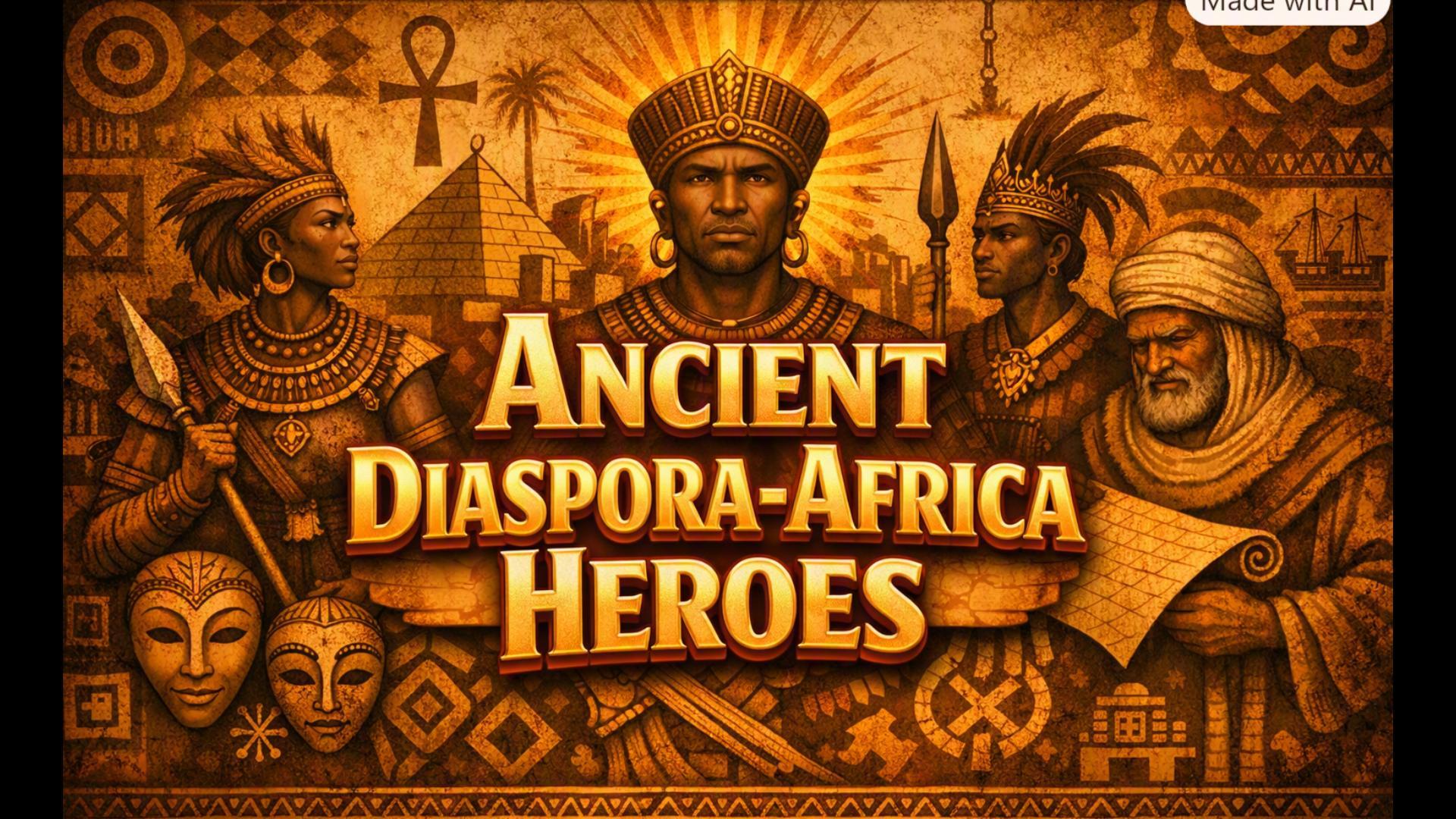
All that, to tell you that the Garifuna Culture and its people are important to me, important to the Afro-Scope Project, and important to Africa. My co-members of our Afro-Scope family are also writing the tales of African heroes and heroines of the African continent and the Diaspora Africa. I personally opened the “Ancient Diaspora Africa” category. And, I opened it with the tale of one of the most celebrated heroes among the Garinagu (plural of Garifuna) people. I have described them as “The Most African-Africans Outside Africa.” Naturally, the hero in question was among the most important people in Diaspora Africa in the 18th century. I speak of “The man who defied the British Empire,” as he is commonly described in Saint Vincent and the Grenadines in the Caribbean, and in Central America. I speak of one of the Africans who led African slaves in Saint Vincent and the Grenadines in the Caribbean to resist European transatlantic slavery in the 18th century. I speak of the man named Joseph Chatoyer, the late Paramount Chief of the Black Caribs.

PRELUDE: GARIFUNA CULTURE– “THE MOST AFRICAN-AFRICANS OUTSIDE AFRICA”
Once upon a day in 1635, there were a couple of shipwrecks on the Caribbean Sea. Their destination was the country of Saint Vincent and the Grenadines in the Caribbean. It was during the European transatlantic slave trade. The cargoes of the wrecked ships were African slaves from West and Central Africa, and the wreck happened near the shores of Saint Vincent and the Grenadines. Most, if not all the slave traders and crews on the upper decks of the ships perished while most, if not all the African slaves on the lower decks survived. The survived slaves swam ashore and escaped into the forests. And so it was, that their struggle to resist re-enslavement by the Europeans began, and it lasted successfully for over 150 years.

Here is the link to a more detailed video documentary about this background of the Garifuna story: https://afro-scope.com/2026/05/10/afrocentric-titbits-on-diaspora-african-heritage-featuring-the-most-african-africans-outside-africa/
A FEW OF THE HEROIC EXPLOITS OF JOSEPH CHATOYER:
Born in 1738 in Saint Vincent and the Grenadine, Joseph Chatoyer rose to prominence as a local chief in the late 1760s. He was prominent in the resistance against re-enslavement of the Garinagu (plural of Garifuna) people, who were then known as the Black Caribs. He gradually rose to solidify his role when he finally became the paramount chief. He then became the Commander of the Garifuna Army during the “First Carib War” from 1772 to 1773. The “Second Carib War” started in 1795, and Joseph Chatoyer led it until his death on March 14, 1795.

Before his death, Joseph Chatoyer had gone beyond leading a successful resistance against the re-enslavement of African slaves by Europeans, especially the British, in Saint Vincent and the Grenadines. He also frustrated their colonial, slavish, oppressive heartless, exploits. Notably, Chatoyer frustrated the Europeans from oppressively grabbing land all over the Islands of Saint Vincent and the Grenadines for their sugar plantations.


**********
**********

COUNTRY: Caribbean Island of Guadeloupe.
DATE OF BIRTH: 1772.
DATE OF DEATH: 1802, aged about 30.
OCCUPATION: The Fearless Freedom Fighter of Guadeloupe
SUPERVISOR/EDITOR: Harry Agina.
——————-
Hi. I am Asma’u Suleiman. History remembers many who accepted oppression because they believed resistance was hopeless. SOLITUDE, in the 19th century Caribbean Island of Guadeloupe chose another path. She stood against slavery, knowing that freedom was worth any sacrifice.
Born around 1772 on the French Caribbean Island of Guadeloupe, Solitude was a product of rape of an African slave woman by a French rapist.
During the French Revolution, slavery was abolished in the French colonies in 1794, granting freedom to thousands of enslaved Africans, including Solitude.
That freedom, however, was short-lived. In 1802, Napoleon Bonaparte ordered the restoration of slavery in several French colonies. Refusing to return to bondage, Solitude joined the resistance led by Louis Delgrès and other freedom fighters who resolved to defend their liberty against French forces. Although heavily pregnant, Solitude refused to abandon the struggle. She fought with remarkable courage alongside fellow resistance fighters during the campaign to preserve the freedom that had already been won.

The resistance was defeated, Solitude was captured and sentenced to death. Because she was expecting a child, her execution was postponed until after she gave birth.
On 29 November 1802, one day after delivering her baby, Solitude was executed at about thirty years of age. The fate of her child remains unknown.
Though Solitude’s life was brief, her courage has endured for generations. She is remembered as one of the most celebrated heroines of Guadeloupe’s resistance to slavery and a powerful symbol of the determination of African-descended people to live in freedom and dignity.
Today, monuments and memorials honor her legacy, ensuring that her sacrifice continues to inspire people across the Caribbean, Africa, and the wider world.

LEGACY
“Freedom is never preserved by silence, but by the courage of those willing to defend it.” Solitude remains an enduring symbol of resistance against slavery, female courage, and the unyielding quest for liberty. Her story stands as a lasting reminder that even in the face of overwhelming odds, the human spirit can choose freedom over submission.
This has been the African Heroes Hall of Fame….
Because history celebrates many heroes…
Africa remembers her own.