

August 8, 2026

Greetings!
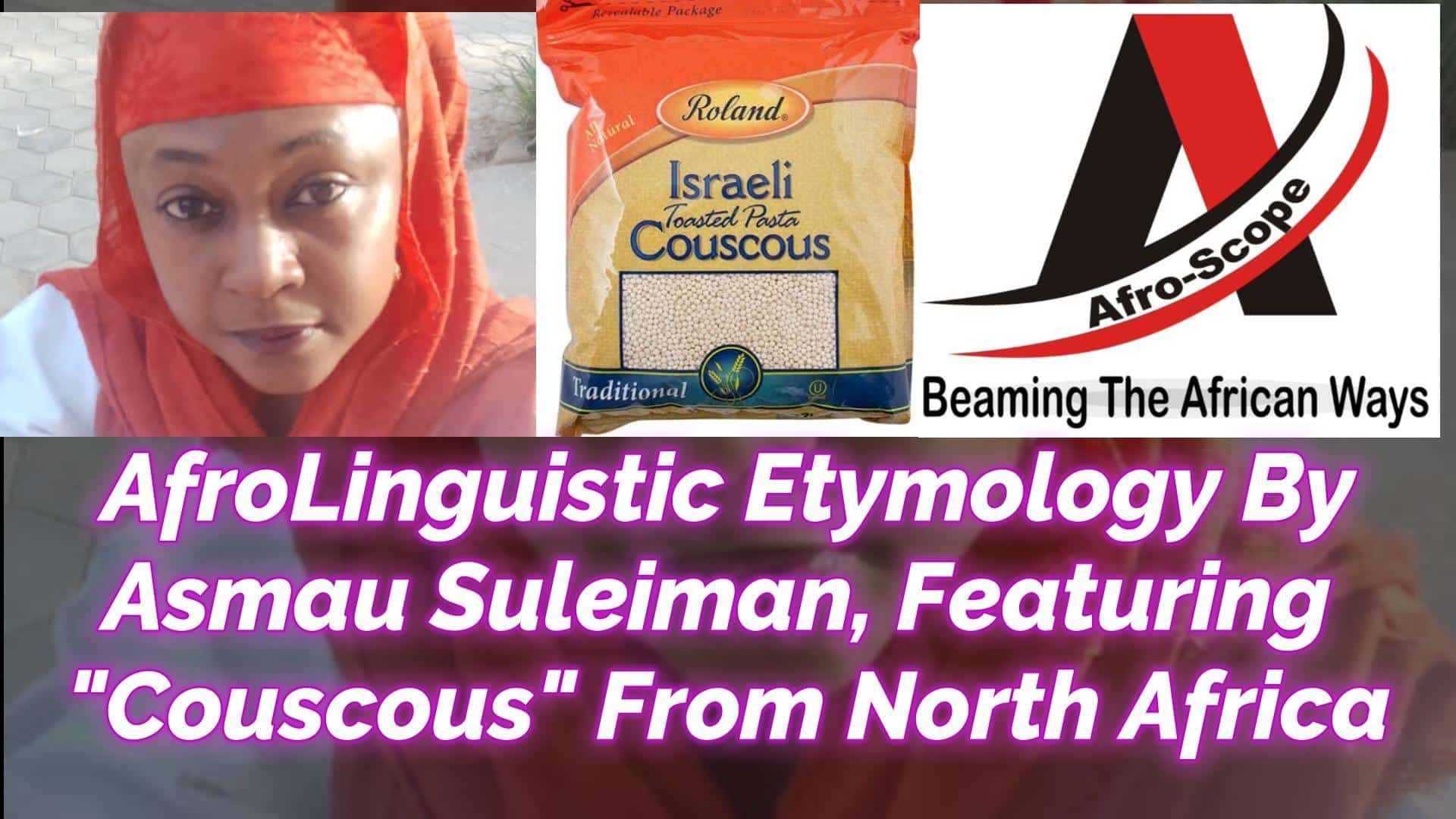
This is Harry Agina with the Afro-Scope Project, where we Beam The African Ways Of Life To The World. It’s time again to beam our AfroLinguistic Etymology series, where we inform you about words of African origin that have made there way into mainstream English dictionaries. In particular, as you can see above, our focus is on cuisines of African origin.
Just under a week ago, precisely on August 6, 2026, we brought you the word IMPI. I discussed the fact that it journeyed around the world from its South African origin and made its way into mainstream English dictionaries without any evolutionary transformation. I did mention that it was an uncommon journey. Most words that made their way into mainstream dictionaries from various languages of the world underwent transformation in spelling, pronunciation, and even slightly in meaning.
We bring you another African word that went through long evolutionary transformation in spelling and pronunciation as it journeyed into mainstream dictionaries. It started in the 13th century as North African indigenous Berber language word SEKSU (also spelt KSEKSU), with Arabic version, KUSKUSI. It ended up in mainstream dictionaries as COUSCOUS in the 16th to 17th century.
Without further ado, here is our pretty philosophically poetic or poetically philosophical etymologist, Asmau Suleiman, with the journey of COUSCOUS for ya:
Hi. I am Asmau Suleiman, and this is the Afro-Scope Project, where African words travel beyond borders, carrying pieces of Africa with them.
Some words travel through books…
Some travel through music…
And some travel through the kitchen. COUSCOUS is one of such words that have made their way out of Africa to the world through the kitchen.

Today, the word couscous is known across the world. It appears on restaurant menus, in supermarkets, cookbooks, and kitchens far beyond the continent where its story began.
But behind this familiar word lies a distinctly North African history. The word couscous is generally traced to North African languages, particularly Tamazight (Berber), with related forms such as seksu, kuseksi, and kseksu. The word later appeared in Arabic as kuskusi, before travelling further into European languages. It eventually got transformed from the Arabic KUSKUS form into its final and present internationally familiar French word, COUSCOUS.
The precise linguistic pathway has been discussed by scholars, but its deep connection with the indigenous languages and culinary traditions of North Africa is firmly established.
And couscous itself is far older than its appearance on modern menus. For generations, communities across the Maghreb have prepared couscous by rolling and steaming tiny grains of semolina, traditionally serving them with vegetables, legumes, meat, or other rich accompaniments.

It is not merely food…
It is hospitality…
It is family…
It is celebration…
It is a dish prepared for ordinary days and extraordinary occasions alike.
In 2020, UNESCO inscribed the knowledge, know-how and practices pertaining to the production and consumption of couscous on the Representative List of the Intangible Cultural Heritage of Humanity, recognizing traditions shared across Algeria, Mauritania, Morocco, and Tunisia.
From North Africa, couscous travelled. And as people travelled, traded, migrated, cooked, and shared their traditions, the word travelled with them.

Today, couscous can be found far beyond the Maghreb. Yet beneath all its modern variations remains an old North African name and an even older culinary tradition.
Perhaps that is the quiet beauty of couscous…
You can change the table…
You can change the company…
You can change the country…
But sometimes, when you sit down to eat, Africa is already there.

Keep eating and speaking Africa, even when you don’t know you are…
Until next time…